There are events that, although contested against the clock and decided in fleeting moments, become etched in collective memory — and the Rally de Portugal clearly belongs to that category. Since its inception in 1967, the Portuguese rally quickly established itself as one of the toughest and most prestigious in the world.
There are several reasons for this: breathtaking landscapes, the passionate Portuguese fans, the country’s organisational excellence, and, of course, the second-by-second rivalries played out on its stages.
The Portuguese “against” the world
The early years were not dominated by “classic” rivalries, but rather by a constant tension between local drivers and the growing international presence.
At the inaugural event in 1967, with 72 crews entered, José Carpinteiro Albino beat António Peixinho, a clear sign that Portugal was not just a host, but also a protagonist through its drivers.
However, Tony Fall’s victory in 1968 marked a turning point: Europe’s top drivers began to view Portugal as a must-attend event, creating a rivalry between national and international competitors that would define the years to come.
In 1969, Francisco Romãozinho brought victory back to Portugal, in a rally that was still a marathon of regularity, where winning meant making fewer mistakes rather than simply being the fastest.
In the years that followed, the rally became truly international: Simo Lampinen, Sandro Munari and Björn Waldegård began to dominate the results. This marked the first “structural rivalry” of the event: Portugal versus the Nordic and Central European specialists, in a rally that paradoxically levelled the playing field — open roads, long road sections and unpredictable conditions.
In the 1970s, one figure stood out: Markku Alén. He won in 1975 and repeated the feat in 1977 and 1978, becoming the first great “master of Portugal”.
More than direct rivalries, there was dominance — yet constantly threatened by near-mythical episodes: the nights in Sintra, the fog in Arganil, and stages where survival was almost as important as outright speed in the fight for victory.
Mikkola vs. Alén: the duel that anticipated the future
The 1980s brought profound changes to rallying, and Rally de Portugal was no exception. Still defined by its toughness and mechanical demands, the “best rally in the world” hosted in 1984 a duel so epic that it was later immortalised on film.
A master of the Portuguese stages, Markku Alén, at the wheel of his Lancia 037, sought to halt the inevitable rise of technology in a battle against Hannu Mikkola and his Audi Quattro A2. Four-wheel drive versus rear-wheel drive in a contest that went beyond the drivers — it marked a paradigm shift in rallying. And Portugal, with its fast and treacherous stages, proved the perfect laboratory.
The advantage went to Mikkola, who, driving the “father” of modern rally cars, defeated Alén by a narrow margin of just 27 seconds. The paradigm had shifted, but the heroes of old “went down fighting”.
Times change, rivals evolve
The end of Group B brought major changes to rallying, but did not diminish the rivalry and excitement on the stages of Rally de Portugal. Proof of this are the two victories of Carlos Sainz, known as “El Matador” in the Portuguese event.
In 1991, driving a Toyota Celica GT-4, he beat Didier Auriol in a Lancia Delta Integrale by just 47 seconds. In his second victory in Portugal, the Spaniard’s margin was even smaller: just 12 seconds separated his Subaru Impreza from Juha Kankkunen’s Toyota Celica GT-Four.
Throughout the decade, Sainz was involved in several other epic battles, though without the same success. In 1998, he was beaten by Scotland’s Colin McRae, driving a Subaru Impreza WRC, who won by a razor-thin margin of just 2 seconds.
One of the closest duels in Rally de Portugal history, it was a clear example of the competitive balance between top drivers and cars during one of rallying’s golden eras.
In 1999, McRae repeated his victory, this time in a Ford Focus WRC, once again finishing just ahead of Sainz, by 12.3 seconds. These battles remain in fans’ memories as pure rallying, where every second counted on the Portuguese stages.
The battle that launched a legend: Ogier vs Loeb
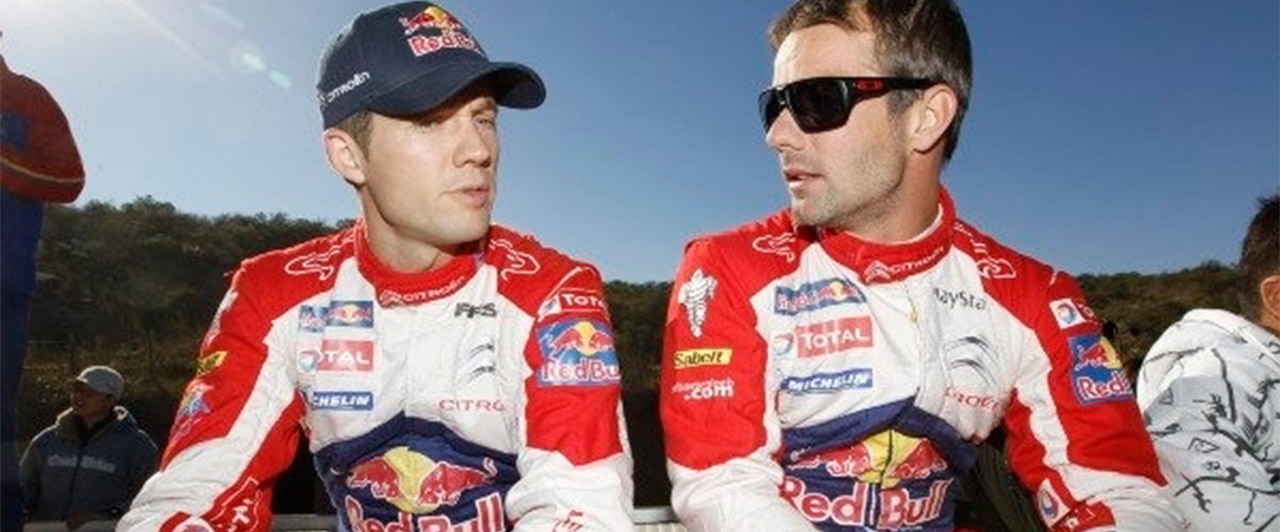
The 2010 Vodafone Rally de Portugal marked the beginning of one of the most significant rivalries of the modern era. It was here that Sébastien Ogier claimed his first WRC victory, driving a Citroën Junior Team C4 WRC, in a close fight with Sébastien Loeb, then the dominant force in the championship. Ogier won by 7.9 seconds, proving he had both the speed and composure to challenge the very best.
In 2011, the rivalry between Ogier and Loeb intensified. Now more experienced and confident, Ogier led much of the rally and secured victory by a more comfortable margin of 31.8 seconds over Loeb, driving a Citroën DS3 WRC. This renewed French duel confirmed that their 2010 battle was no coincidence, but the beginning of a generational clash.
Ogier vs Tänak: a new generational clash
More recently, Rally de Portugal has continued to deliver thrilling battles. The 2024 edition was marked by the fight between Sébastien Ogier, already a living legend of the WRC, and Estonia’s Ott Tänak, both driving the Toyota GR Yaris Rally1 Hybrid.
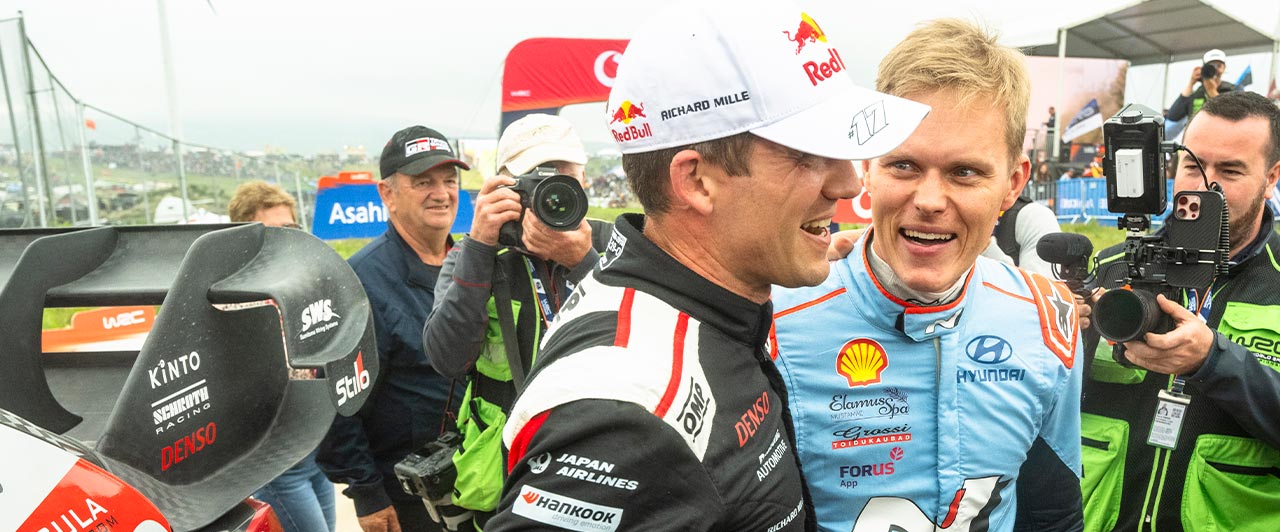
After three intense days and multiple lead changes, Ogier ultimately prevailed by just 7.9 seconds — the exact same margin that secured his victory over Loeb in 2010.
The 2025 edition continued this tradition of thrilling battles, once again featuring Ogier. Tänak led much of the rally until a power steering issue on his Hyundai set him back, allowing Ogier to secure victory by another narrow margin: just 8.9 seconds.